$65 Could help cover an orphaned child’s essential needs, including food and everyday necessities.
 Donate
Donate
Donate
Surplus
Deductions
Total amount subject to Khums $0
Khums Due $0
Sahm al Imam to be paid $0
Sahm al Sada to be paid $0
Zakat Al-Fitra is a mandatory charitable contribution given by Muslims during the month of Ramadan, and must be paid before noon on the day of Eid (or before Salat al-Eid for those attending the prayer). This obligation ensures that those in need are able to share in the joy of Eid and celebrate the end of Ramadan with comfort.
Al-Ayn Social Care Foundation is authorized by Al-Sayyid Al-Sistani to collect and distribute Zakat Al-Fitra, ensuring it reaches orphaned children registered under our care.
If you sponsor an orphaned child, please remember that Zakat Al-Fitra should also be paid on their behalf.
Thousands of orphaned children and their families are enduring extreme hardship, with many unable to meet even their most basic needs. In this blessed month, your generosity delivers relief where the need is great, bringing hope in their hardest moments.
Your Ramadan giving provides vital support for families struggling with poverty, hunger, and insecurity. For widowed mothers striving to protect their children, your compassion becomes a lifeline – offering essential aid today and a path toward stability tomorrow.

$65 Could help cover an orphaned child’s essential needs, including food and everyday necessities.

$110 Could provide an orphaned child with a disability access to vital mobility or medical support.
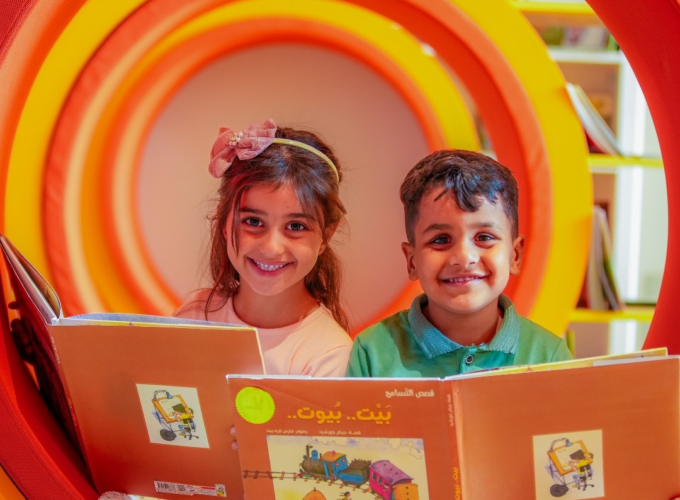
$160 Could contribute to an orphaned child’s school fees for one year.
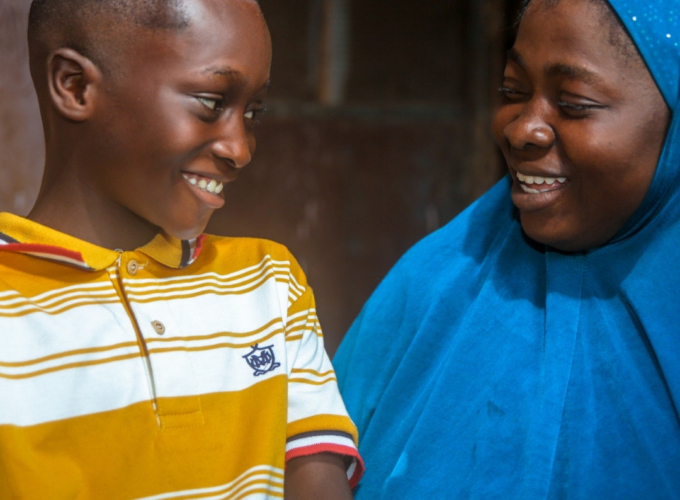
$240 Could help orphaned children with cancer and other serious conditions receive vital treatment and medication.
Your Sadaqa Jariya contributes to the next homes we build – providing families with a place to belong, and children with the foundation they need to flourish.
One Sadaqa Jariya share towards building Luminous Stars Centers and housing complexes – helping create lasting systems of care and safe homes for orphaned children and their families.
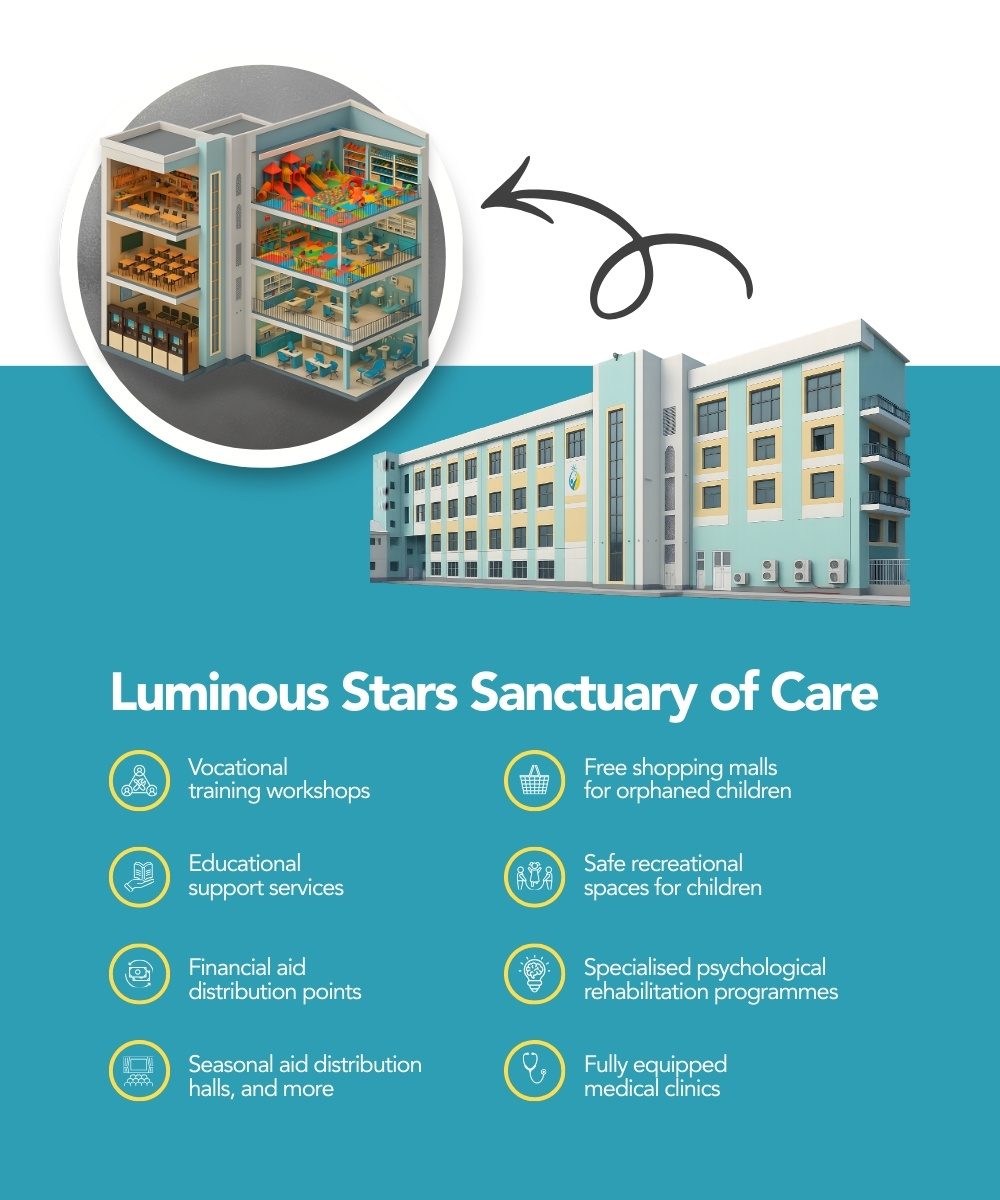
In Iraq, our Luminous Stars Centers deliver holistic care through a six-pillar model – financial, medical, psychological, educational, vocational, and housing support. Through this approach, we have supported more than 110,000 orphaned children, providing sustained care at scale across the country.
This Ramadan, fulfill your religious obligations by supporting orphaned children across Iraq, Afghanistan, and Ghana. In communities affected by hunger, instability, and the absence of basic services, your donations delivers essential aid to children and families when it is needed most.




Al-Ayn has 20 years of experience delivering trusted, expert-led care for orphaned children across Iraq, Afghanistan, and Ghana.
In Iraq, our Luminous Stars Centers deliver holistic care through a six-pillar model – financial, medical, psychological, educational, vocational, and housing support. Through this approach, we have supported more than 110,000 orphaned children, providing sustained care at scale across the country.
Our work is carried out under the authorization (Ijaza) of
Al-Sayyid al-Sistani, granting Al-Ayn permission to accept religious dues including Sadaqa, Khums (both parts), and Zakat. This sacred trust ensures your religious obligations are fulfilled with confidence, while your contributions support orphaned children in need. Receipts issued by Al-Ayn are sufficient for the fulfilment of these religious dues.
Al-Ayn continues its life-changing work across Iraq, Afghanistan, and Ghana. When orphaned children face crisis and hardship intensifies, your support ensures we are there – reaching those in need, in places too often forgotten.
Luminous Stars Centers open in Iraq

homes built or refurbished

fully-equipped housing complexes constructed

medical treatments and consultations facilitated

Sadaqa Jariya projects established
For 20 years, Al-Ayn has worked under the direct guidance of His Eminence Sayyid Ali al-Sistani, upholding the highest standards of accountability and compassion.
Since its inception, Al-Ayn has supported more than 210,000 orphaned children with a holistic model of care that is transparent, effective, and life-changing. Every donation is monitored, every penny accounted for, and every child’s needs carefully followed up.
The 19th, 21st, and 23rd nights of Ramadan are among the most blessed of the year. On these sacred nights of Laylatul Qadr, your donation can provide urgent relief to orphaned children and vulnerable families facing extreme poverty and crisis across the regions we serve.
Give on Laylatul Qadr and multiply the impact of your generosity.
The sacred month of Ramadan begins with the sighting of the new crescent moon, which signals the end of Sha’ban and the arrival of the ninth month of the Islamic calendar. In 2026, Ramadan is expected to begin on the evening of 19th February 2026, subject to moon sighting.
As with every year, the exact start date may differ from place to place depending on local moon sightings, but Muslims around the world will join together in observing this blessed time of fasting, prayer, and reflection.
Laylatul Qadr is the most sacred night in the Islamic calendar. Often referred to as the Night of Power or the Night of Decree, it holds immense spiritual importance for Muslims around the world.
The Qur’an describes Laylatul Qadr as a night “better than a thousand months” (Surah Al-Qadr, 97:3). Worship on this night carries the reward of more than eighty years of devotion, making it a time when prayers, supplications, and acts of charity are especially powerful. According to Hadith, Laylatul Qadr falls on the 19th, 21st, or 23rd night. Greater emphasis is placed on the 21st and 23rd nights, with particular importance given to the 23rd.
The best way to give Sadaqa Jariya (ongoing charity) this Ramadan is by investing in acts that provide continuous benefit to others. This can include donating towards our projects in Iraq, such as our Luminous Stars centers or our housing projects. At Al-Ayn, our Sadaqa Jariya projects benefit orphaned children and their families for generations.
Eid al-Fitr marks the end of Ramadan and the beginning of the Islamic month of Shawwal. Like the start of Ramadan, the exact date depends on the sighting of the new moon.
This transition from fasting to celebration is marked by special prayers, family gatherings, and charitable giving, allowing every believer to share in the blessings of the month just passed.
There are times when fasting in Ramadan cannot be completed, and Islam provides guidance on how to compensate for these missed obligations through Fidya and Kaffarah. These acts of giving not only fulfill a religious duty but also extend compassion to those in need.
Fidya is required when a person cannot fast due to a long-term illness, old age, or another permanent reason, and they will never be able to make up the fasts later. In this case, a set donation is given for each day missed, which provides food for those struggling with hunger. At Al-Ayn, this is calculated as the cost of giving 750g of staple food – equivalent to $1.25 per missed day.
For other missed fasts where someone is able to do so, the obligation is to make them up at a later date. However, if a fast is broken deliberately without a valid reason, Kaffarah may also become due. The Kaffarah amount for deliberately missing a fast is 750 grams of food to 60 needy people, equal to 45kg in total (based on rice).
Al-Ayn is authorized to collect Kaffarah dues and has calculated the amount as $60 for each day that a fast is deliberately missed or broken.
You can give Ramadan donations securely through our online platform, our mobile app, or by bank transfer. Each Ramadan project has its own dedicated page where you can learn more and choose how to give.
Al-Ayn is honored to have the support of Al-Sayyid Al-Sistani, who has granted us an Ijaza (authorization) to accept religious dues such as Sadaqa, Khums (both parts), and Zakat.
This sacred trust enables us to serve orphaned children with your contributions, ensuring your religious obligations are fulfilled with confidence.
Receipts issued by Al-Ayn are sufficient in fulfilling one’s obligation to pay their religious dues.
Al-Ayn maintains a high level of transparency, providing updates on projects and impact so you can see how your contribution is changing lives.